



Florida’s Sports Betting Debate Escalates to Supreme Court



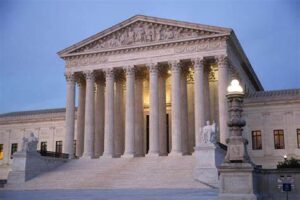 The Florida sports betting case has taken an unexpected turn as it moves towards the U.S. Supreme Court, following a recent ruling by the D.C. Circuit Court of Appeals. This ruling has reignited hope for the Seminole Tribe to reintroduce sports betting in the state as the outcome could have significant implications for sports betting regulations across the US.
The appellate court’s decision, which overturns the previous ruling restricting gambling operations to physical tribal lands, opens up new possibilities for the Seminole Tribe to revive sports betting in Florida while the legal proceedings unfold.
However, achieving a final resolution will present challenges. For the case to be reviewed by the Supreme Court, at least four out of the nine justices must agree, making the chances of acceptance uncertain. Nonetheless, due to the unique circumstances and substantial legal issues at stake, this case warrants consideration by the highest court in the land.
Adding to the complexity, one of the plaintiffs in the case, West Flagler, is expected to request a rehearing en banc before the full D.C. Circuit. If granted, this hearing in front of the entire court of appeals could delay the resolution by an additional year. Furthermore, West Flagler may also seek review by the U.S. Supreme Court, further extending the timeline.
The timeline for reintroducing sports betting in Florida relies on pursuing additional avenues of judicial review. If the Supreme Court decides to take up the case, it is likely that merits briefing and an oral argument will occur in 2024, further postponing any potential relaunch of sports betting in the state.
While the Seminole Tribe and other gaming operators await a final decision, it is crucial to comprehend the legal complexities involved. Native American tribes are granted the right to operate gaming on their lands through compacts. However, this case raises the question of whether mobile betting falls within the purview of these compacts. This crucial legal issue has implications for both tribal and non-tribal gaming operators across multiple states, underscoring the need for the Supreme Court to provide clarity.
The Seminole Tribe’s aspirations of reintroducing mobile sports betting in Florida hang in the balance. If the Supreme Court upholds the appellate court’s decision, the tribe’s dream could become a reality. However, until all federal court proceedings, including those before the Supreme Court, reach a final conclusion, sports betting in Florida remains on hold.
The appellate court’s reversal not only affects the Seminole Tribe but also has broader ramifications for the future of sports betting in Florida. Hard Rock, owned by the Seminole Tribe, briefly held a monopoly on mobile sports betting in the state in November 2021 until a judge deemed the compact between the state and the tribe unlawful. The outcome of this case could significantly shape the landscape of sports betting regulations and operations in Florida for years to come.
As the legal battle continues, it remains uncertain whether the Supreme Court will accept the case. The conflicting rulings from different circuits and the magnitude of the legal issues involved provide compelling reasons for the highest court to review the matter. However, until a decision is reached, Florida residents and sports enthusiasts must patiently await any developments regarding the relaunch of sports betting in the state.