



Ninth Circuit Rules Kalshi’s Sports Contracts Constitute Illegal Gaming on Tribal Land



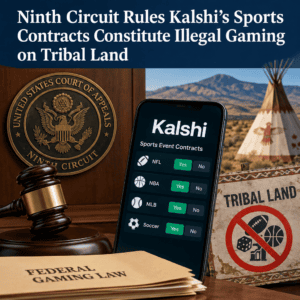 A federal appeals court has delivered a significant setback to Kalshi, ruling that the prediction market operator is likely violating federal gaming law by offering sports event contracts on tribal lands in California. The decision, issued Wednesday by the Ninth Circuit Court of Appeals, reverses a lower court’s refusal to block Kalshi and its distribution partner Robinhood from offering the contracts on the territories of three California tribes.
The Court’s Reasoning
The three-judge panel concluded that the tribes – Blue Lake Rancheria, Chicken Ranch Rancheria of Me-Wuk Indians, and Picayune Rancheria of Chukchansi Indians – are likely to succeed on their claims that Kalshi’s event contracts violate the Indian Gaming Regulatory Act (IGRA) and the tribes’ own gaming ordinances. In the opinion authored by Judge Margaret McKeown, the court found that the contracts amount to Class III gaming, the category covering casino-style betting that requires tribal-state compacts and tribal authorization.
The panel was unpersuaded by Kalshi’s central argument: that as a federally designated contract market regulated by the Commodity Futures Trading Commission (CFTC), its products fall outside state and tribal gaming jurisdiction. The court characterized the contracts as, in essence, “the ‘stuff’ of sports betting,” rejecting the position that CFTC oversight shields the platform from gaming law.
The district court had denied the tribes’ request for a preliminary injunction in November, finding the tribes unlikely to prevail. The Ninth Circuit’s reversal clears the way for a court-ordered halt to the contracts on tribal lands while the litigation proceeds.
A Broader Legal Reckoning
The ruling marks Kalshi’s second adverse appellate decision in less than a month. On August 28, the same court ruled unanimously against Kalshi in a separate challenge brought by Nevada, affirming the state’s authority to enforce its gambling laws against the platform. That case drew support from more than two dozen tribes and tribal organizations.
The decisions deepen a widening circuit split. The Third Circuit previously ruled in Kalshi’s favor in a dispute with New Jersey, accepting the company’s position that its federally regulated event contracts are not subject to state gambling law. New Jersey’s attorney general has since petitioned the U.S. Supreme Court to resolve the question of whether prediction market operators can offer sports wagers without complying with state gambling frameworks. Kalshi’s sports event contracts have also drawn enforcement efforts from a growing list of states, including Washington, where a state court judge granted a preliminary injunction against the platform in July.